
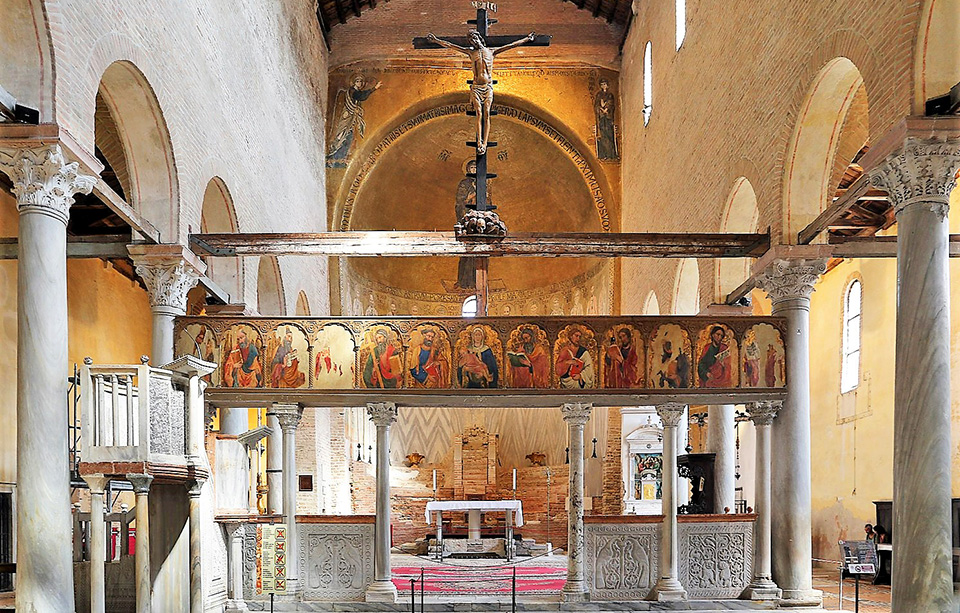
The Cathedral of Santa Maria Assunta is a notable example of Venetian-Byzantine architecture, one of the most ancient religious edifices in the Veneto. According to an ancient inscription, it was founded by the exarch Isaac of Ravenna in 639.
Welcome to Venice
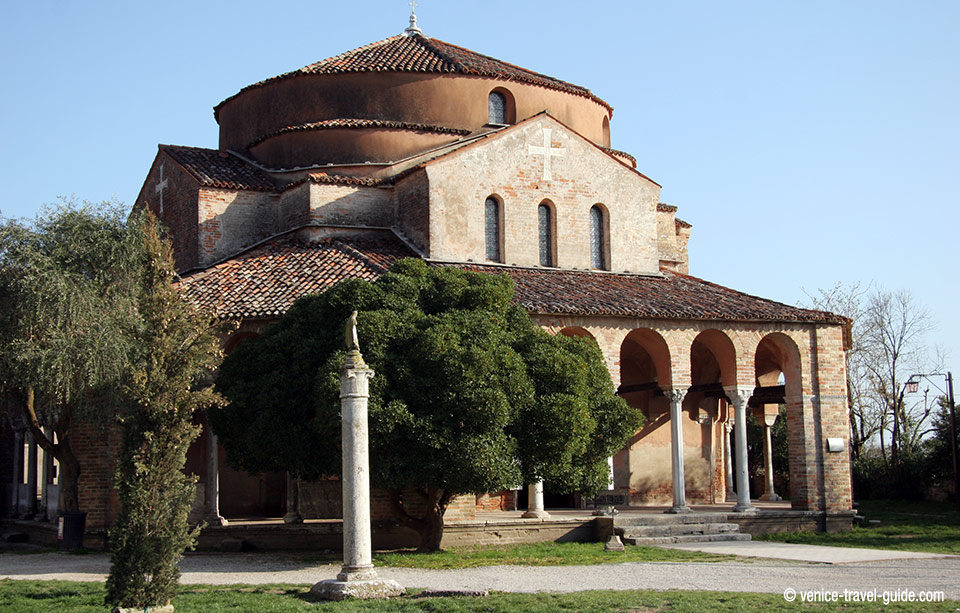
The Church of Santa Fosca is a small church rebuilt in the 12th century, with a Greek cross plan, surrounded by a perimeter portico with Byzantine columns and sculpted capitals and a circular roof made of wood.
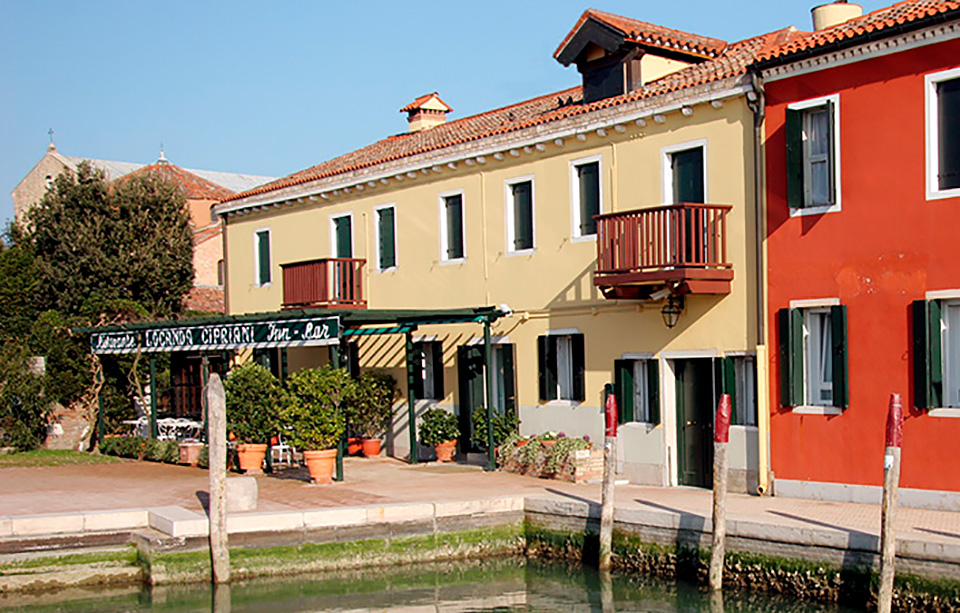
Locanda Cipriani is a traditional inn opened by Giuseppe Cipriani in 1934 on the island of Torcello. As well as its excellent food, it is famous because in 1948 the writer Ernest Hemingway spent time there writing his novel Across the River and Into the Trees.
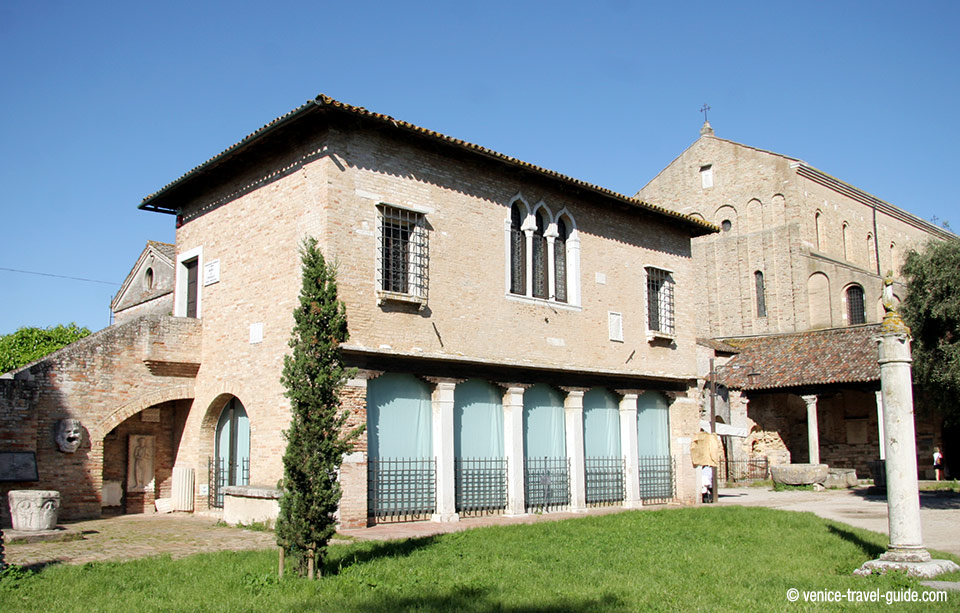
The Torcello museum is housed in two fourteenth century palaces, the Palazzo dell'Archivio and the Palazzo del Consiglio, which was once the seat of the communal government. The museum of Torcello consists of two sections: the medieval and modern section and the archaeological section. In this first section are kept early Christian, high medieval and medieval findings, almost certainly from Torcello and the islands around it. The second houses findings found in the Venetian area, the lagoon, and material from different places, such as a set of small Egyptian statues, covering a period from the Palaeolithic to the late Roman age.
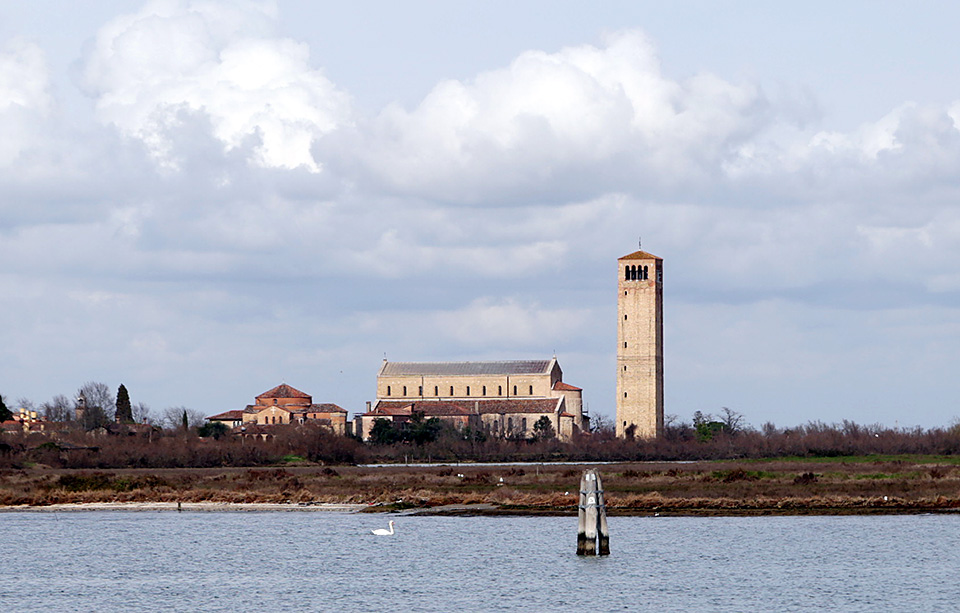
The Bell Tower of the Basilica of Santa Maria Assunta in Torcello was built in 1008, during the reign of Bishop Orso I Orseolo, and is the oldest preserved in the Venetian Lagoon. It is also the only one of the nine bell towers of Torcello that still exists.
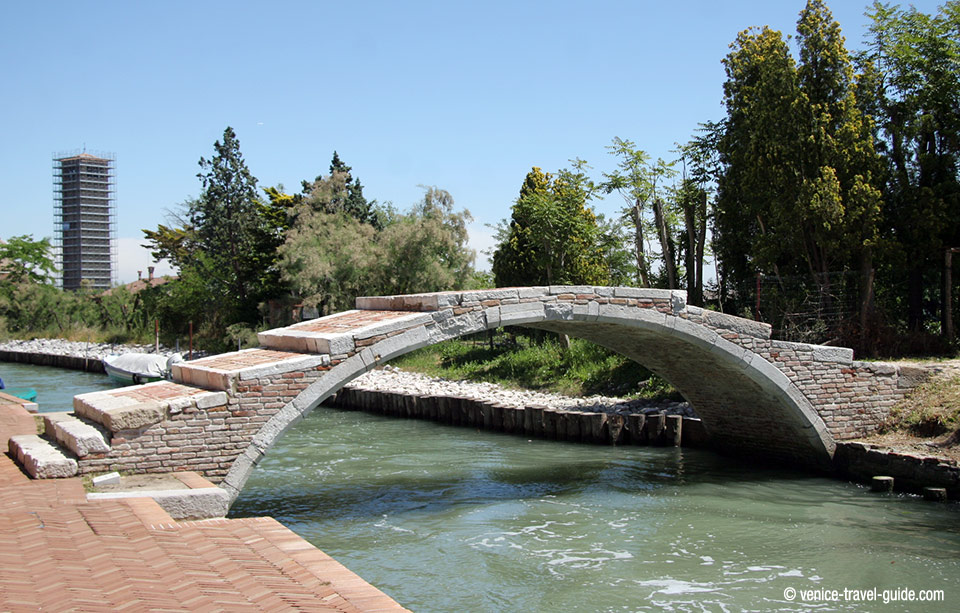
The Devil’s Bridge, arch shaped, is one of the oldest and the only one, with the Ponte Chiodo of Cannaregio, to have retained the characteristics of the old Venetian bridges: it is free of parapets. There is no certainty about the origin of the name: there are those who think the name comes from a local family (Diavoli, in fact), but perhaps the name goes back to the legend spread throughout Italy during the Middle Ages, according to which many bridges were the work of the Devil, who was building in exchange for souls. The latter hypothesis seems the most likely.

VENICE NAMES
Venezia, Venice, Venecia, Venedig, Venise, Venesia, Venecija, Veneza, Venizia, Venessia, Venesiya, Venedeg, Benezia, Venesië, Feneesje, Feneyjar, Venetiae, Venecija, Venetië, Wénitsiye, Venetië, Wenecja, Venetia, Venediku, Vinezzia, Benetke, Venetsia, Venedik, Venesya, Vignesie, Benátky, Veinéis, Горад Венецыя, Венеция.